Archive III (Baby)
by Hollow
2024
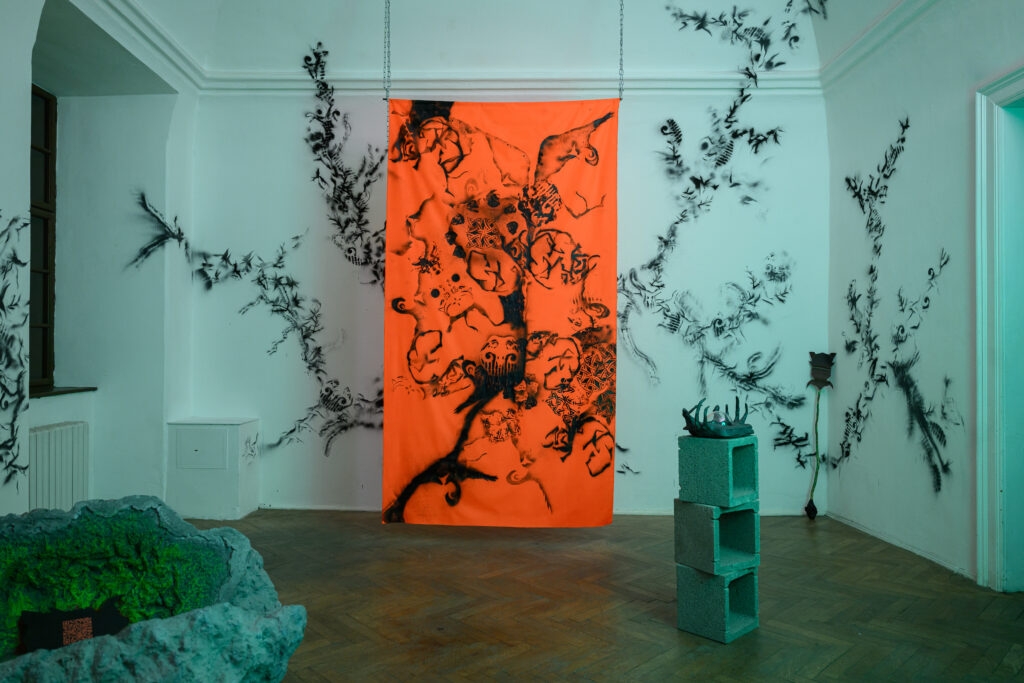
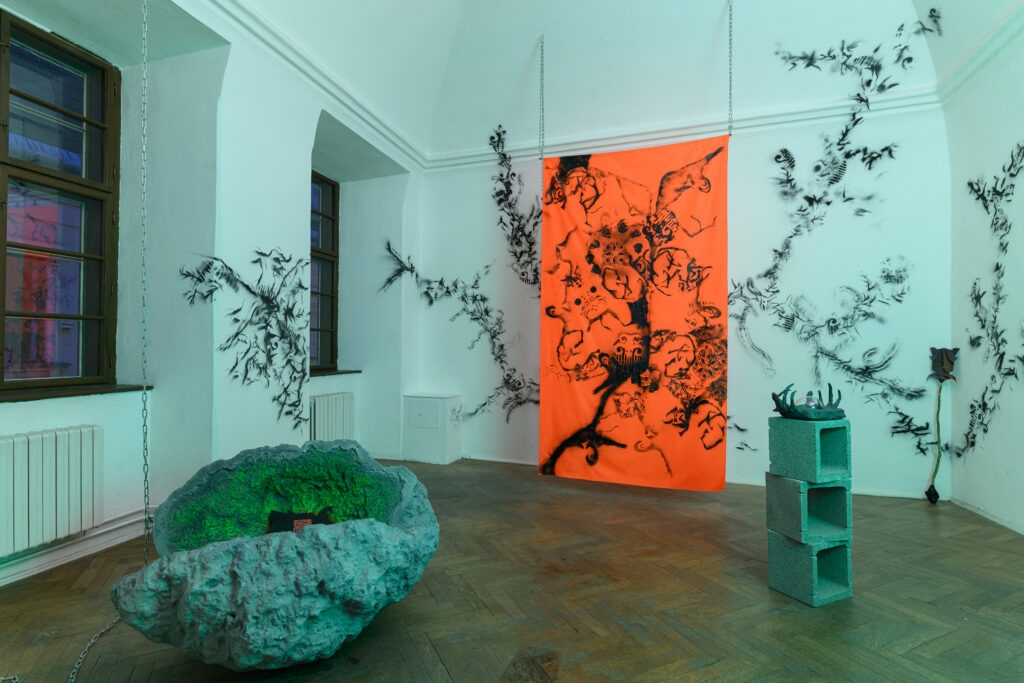
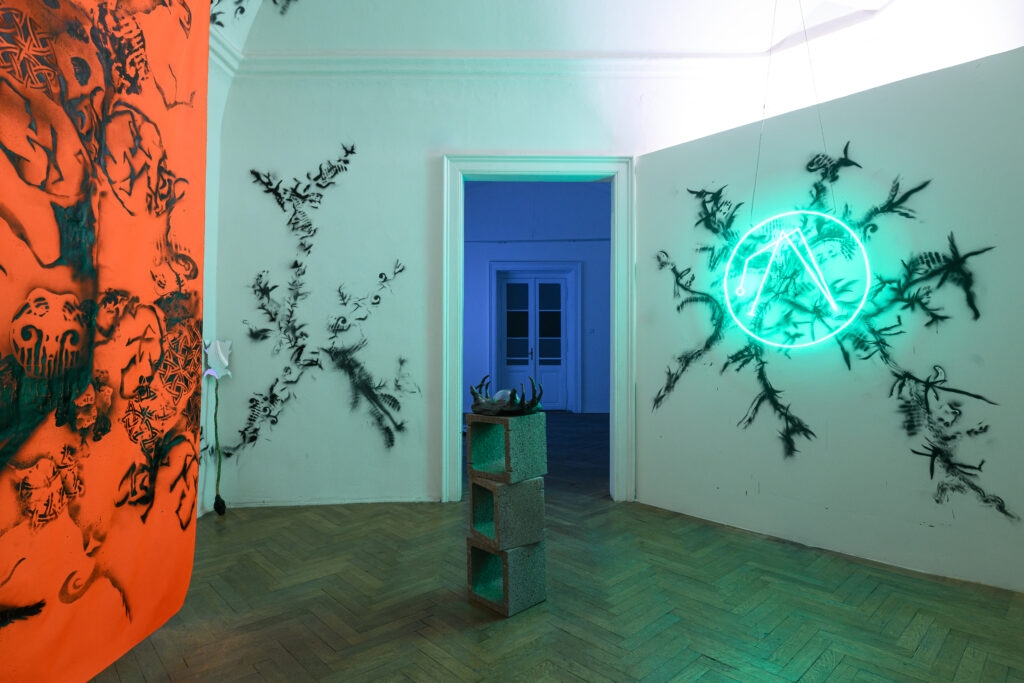
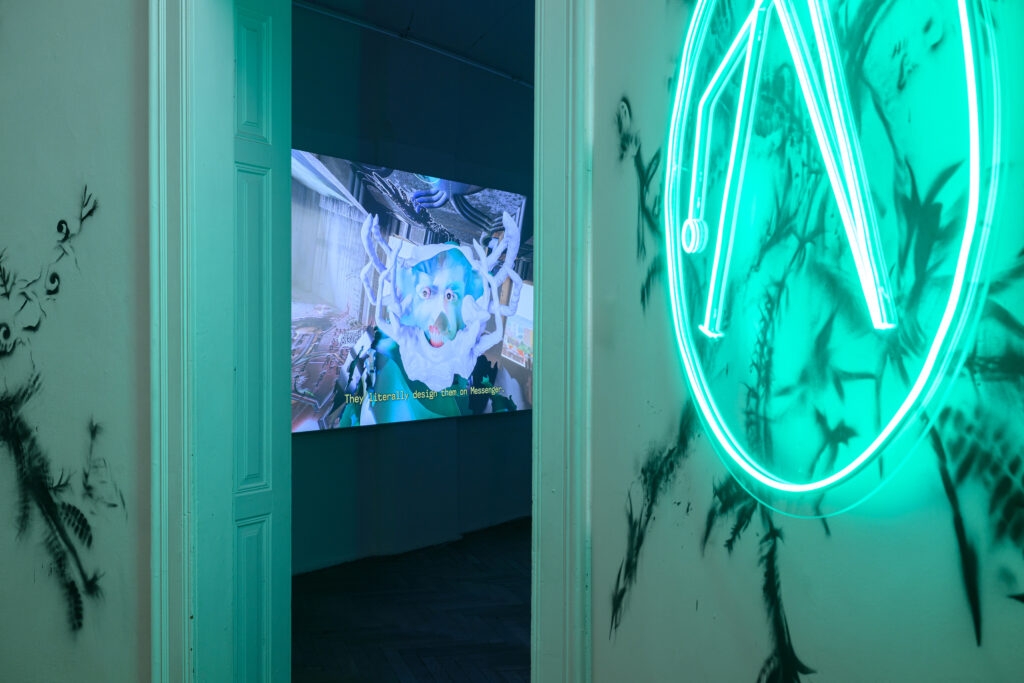
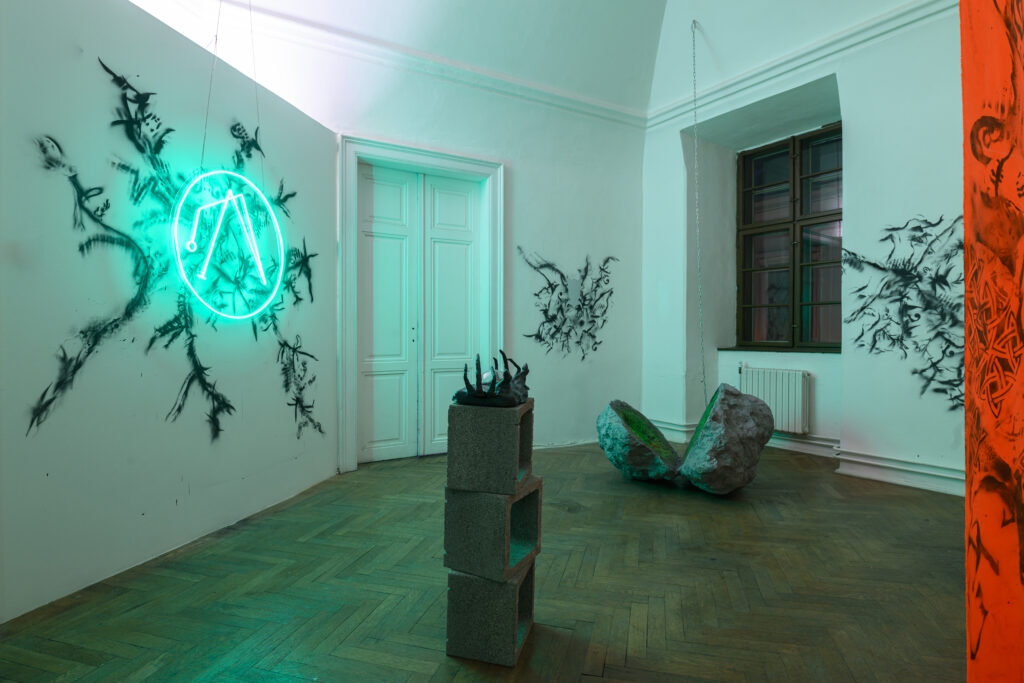
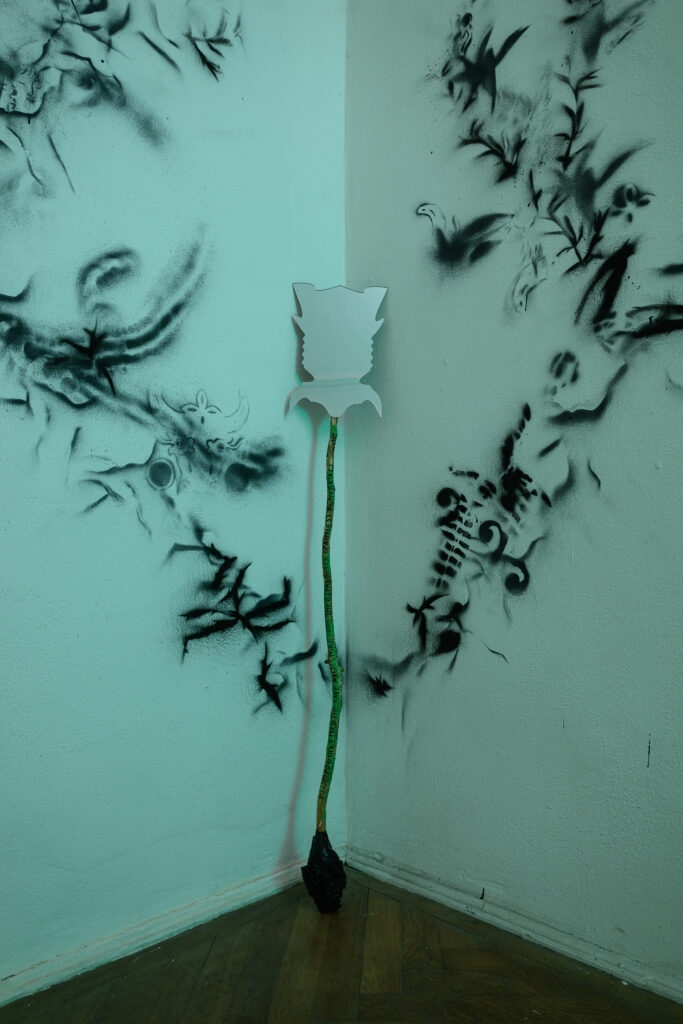
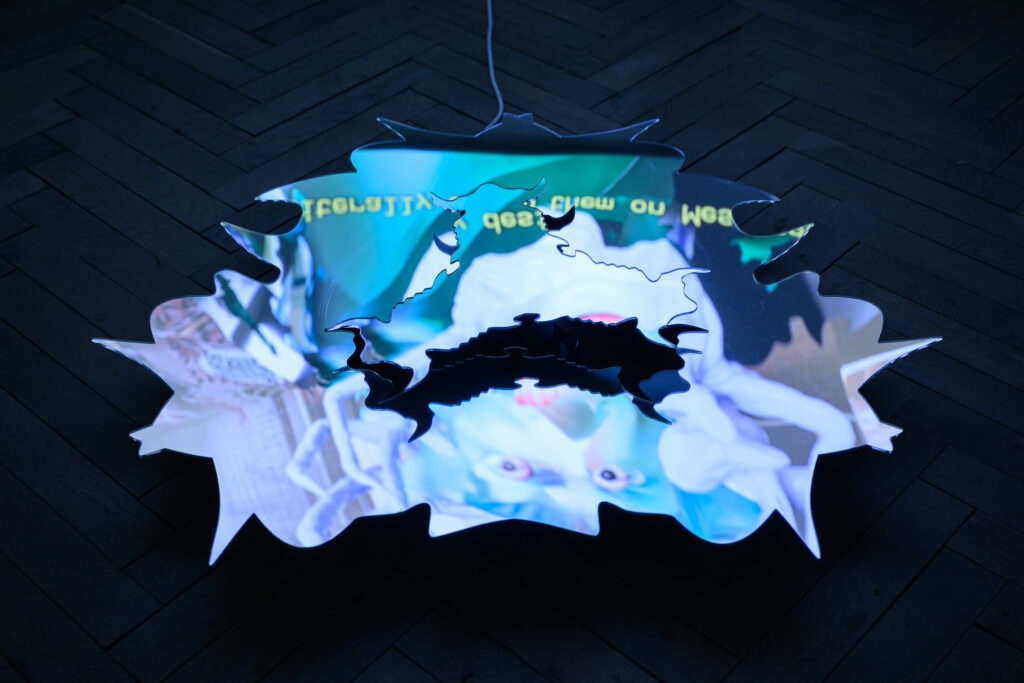
Archive III (Baby) was an exhibition by Hollow as Šopa Gallery in Košice, Slovakia, curated by Natálie Drtinová.
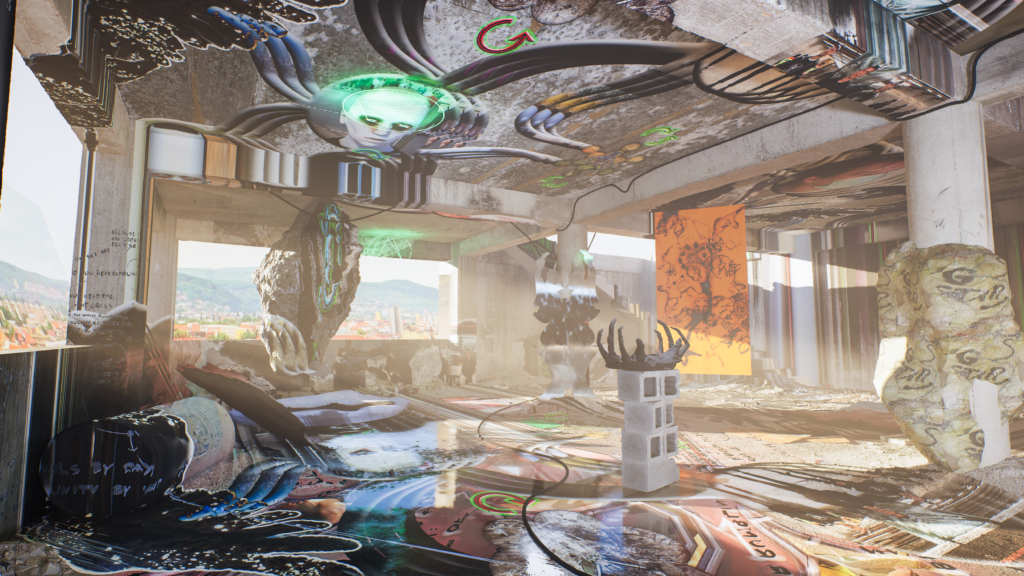
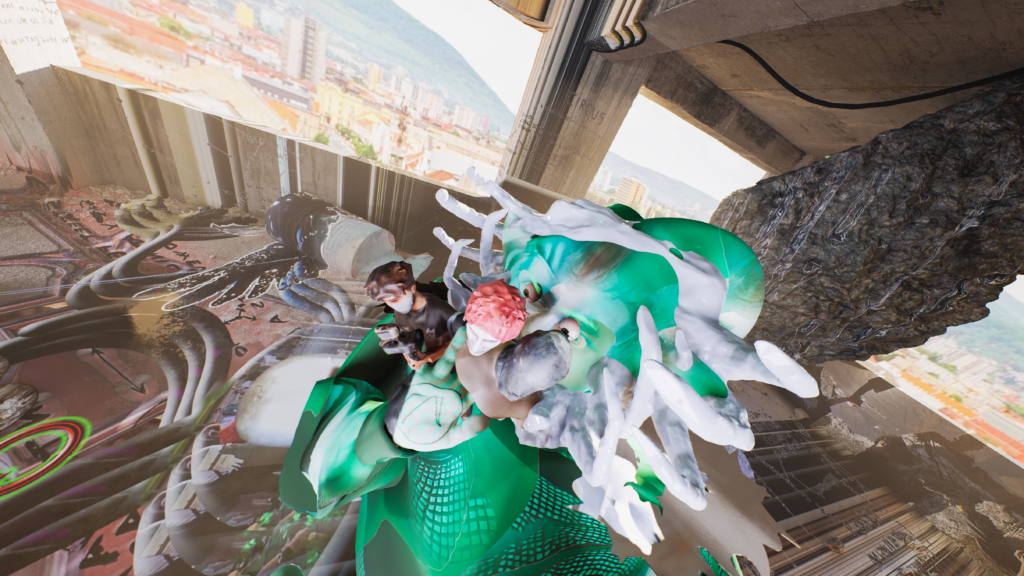
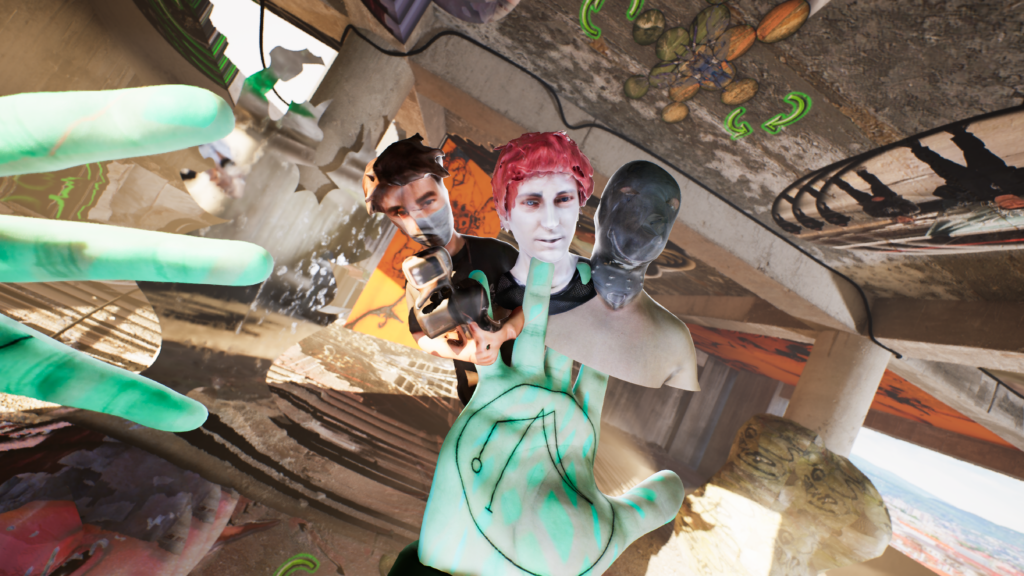
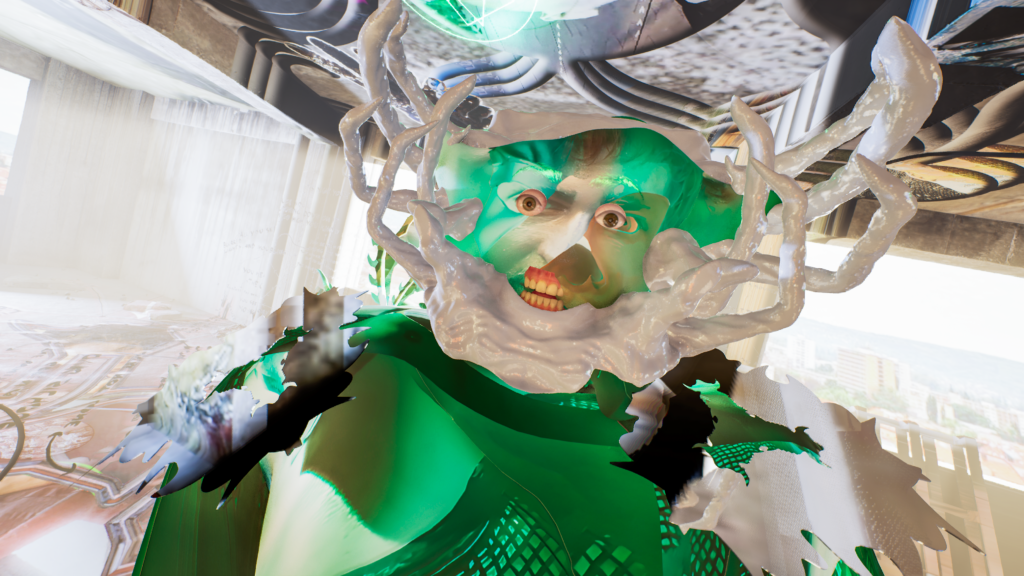
“Hollow, the artist collective formed by Gyula Muskovics, Tamás Páll and Viktor Szeri, invites us into another chapter of its ever-expanding meta-project The Archive, a sprawling network that unites most of its previous projects, stories and characters that keep building on what has been built previously. Beyond being just an artwork, The Archive and its latest chapter Baby also serves as a documentation of and reflection on the group’s practice. In this case, the reflection happens through a newly introduced character, a literal virtual offspring, whose existence speculates on what would an artwork say about its creators.
Hollow’s artistic practice is largely performance-based, merging choreography and installation with live action role-play, gaming and augmented reality techniques. Ever since the conception of its first project, the group has been creating immersive environments located in the near future or somewhere not far from the time-space we live in. These often take us to dark, run-down, apocalyptic realities, where new communities flourish.
It would be too simplistic and shallow to view Hollow’s surrealistic landscapes as dystopian visions, however they might seem as such at first sight. The collective’s “world prototypes” are dark and emerge from the ruins of the present, but does that automatically mean they represent something undesirable? This question perhaps reflects a broader struggle to imagine near or distant futures and alternative ways of coexistence.
Our society is not completely devoid of any future visions – rather, the question is what these visions represent and whose interests they serve. The mainstream realm of mass culture is filled with apocalyptic scenarios of doom which remind us of the famous Mark Fisher quote: “It’s easier to imagine an end to the world than an end to capitalism.” In a similar vein, writer Kara Keeling in her book Queer Times, Black Futures shows how exploitative and eco-predatory companies such as Shell work with possible future scenarios to be able to adapt to any possible crisis and profit off it, ensuring corporate survival, whatever the circumstances might be. The author calls our times The Age of Catastrophe, bringing up the burning contemporary global challenges, such as climate change, economic instability and various sociopolitical crises, situated in and stemming from the context of capitalistic unsustainability. Keeling, continuing in the legacy of queer theorists like José Esteban Muñoz as well as Afrofuturist thinking, advocates for the use of imagination to envision alternative worlds and emphasizes that the liberatory potential of imagination lies in its ability to disrupt the deterministic narratives imposed by corporate and capitalist systems, offering instead a vision of worlds that prioritize joy, community, and equity.
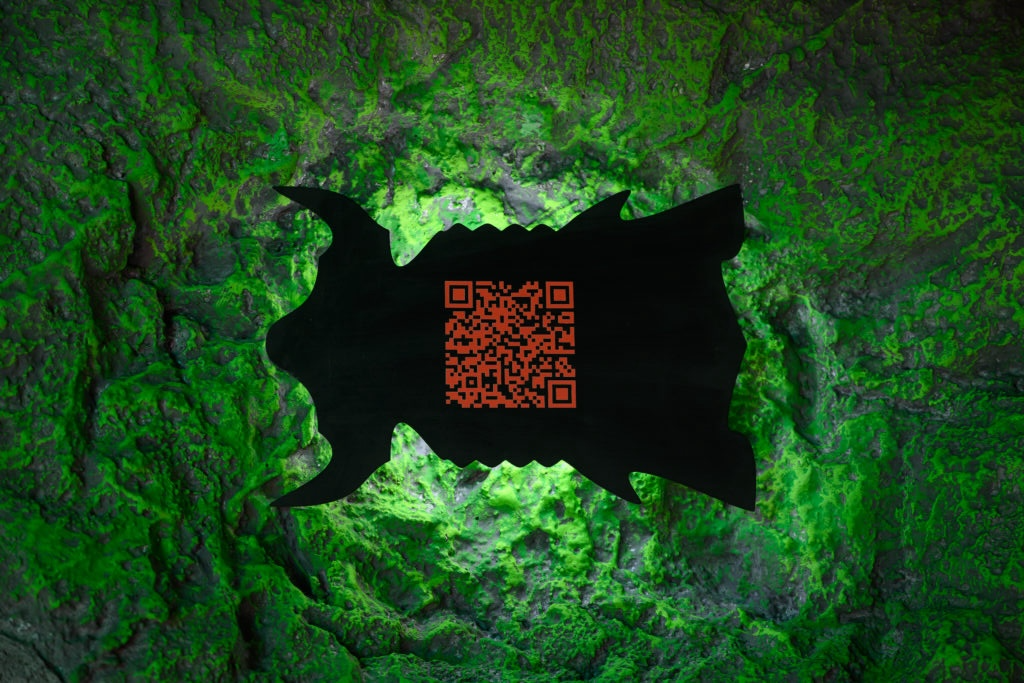
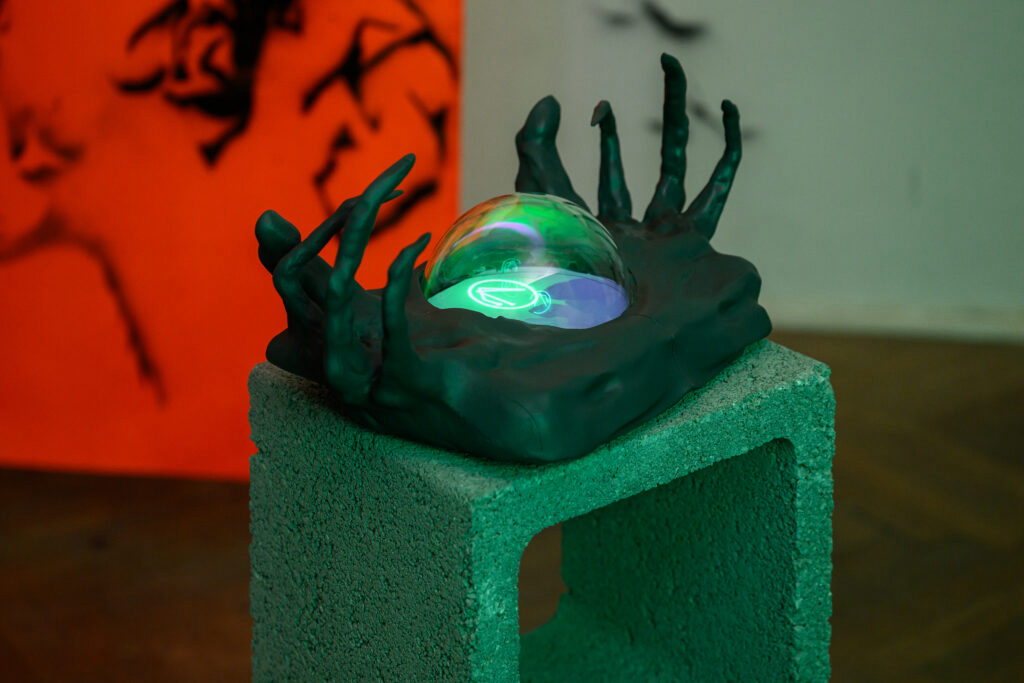
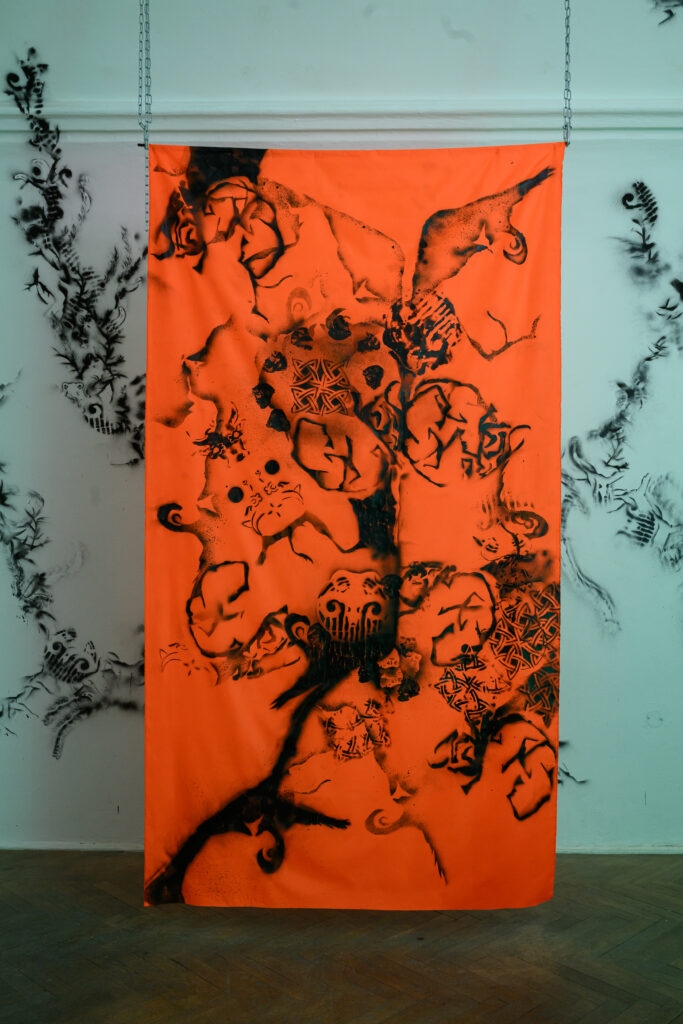
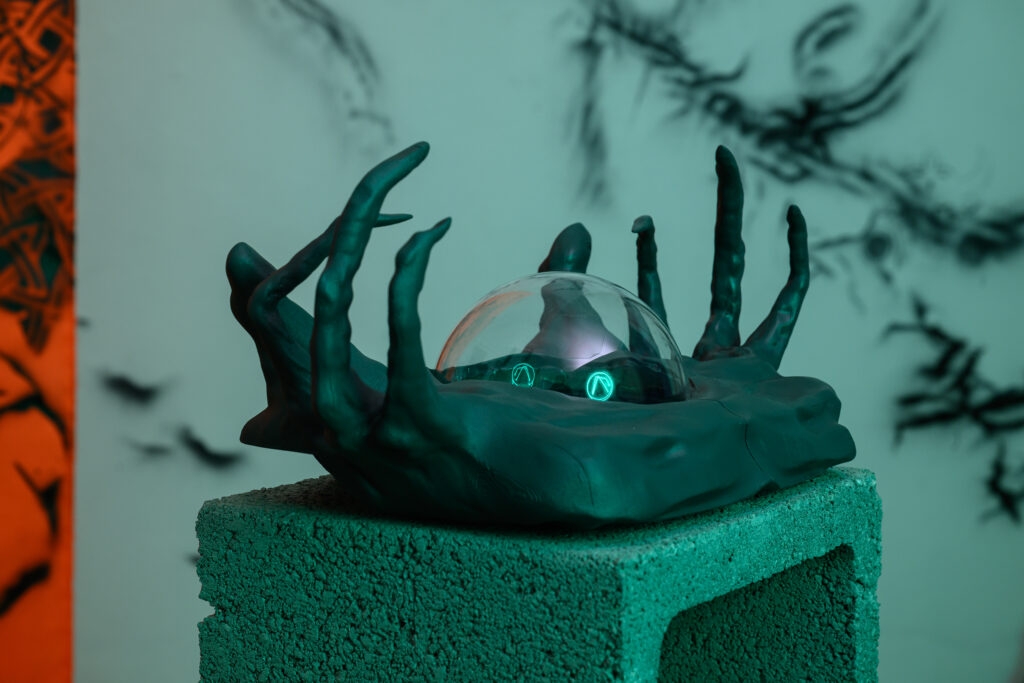
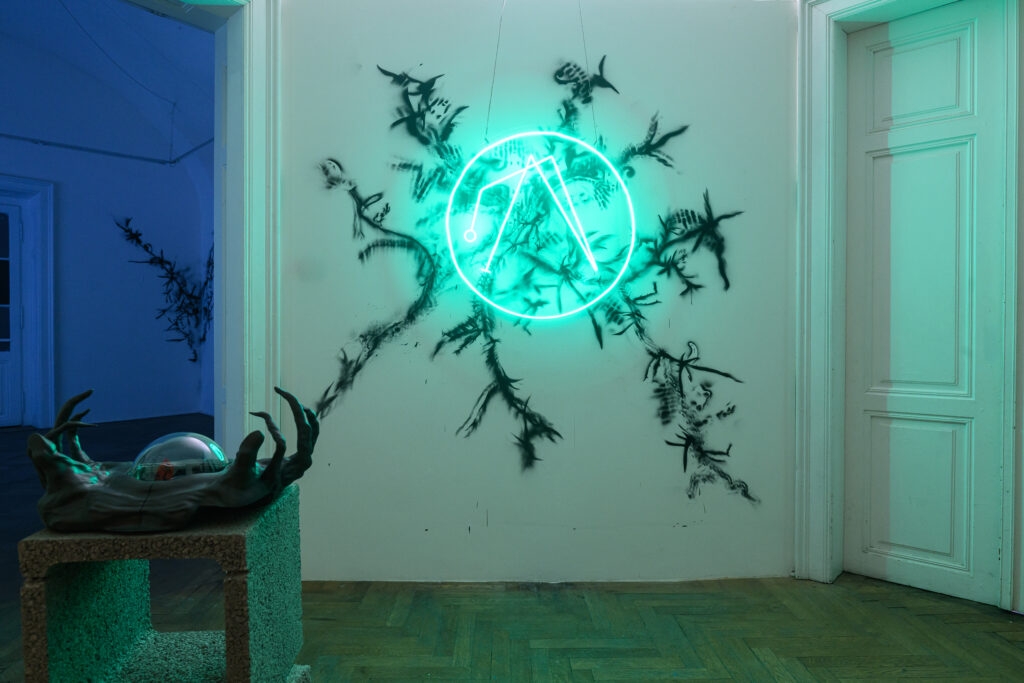
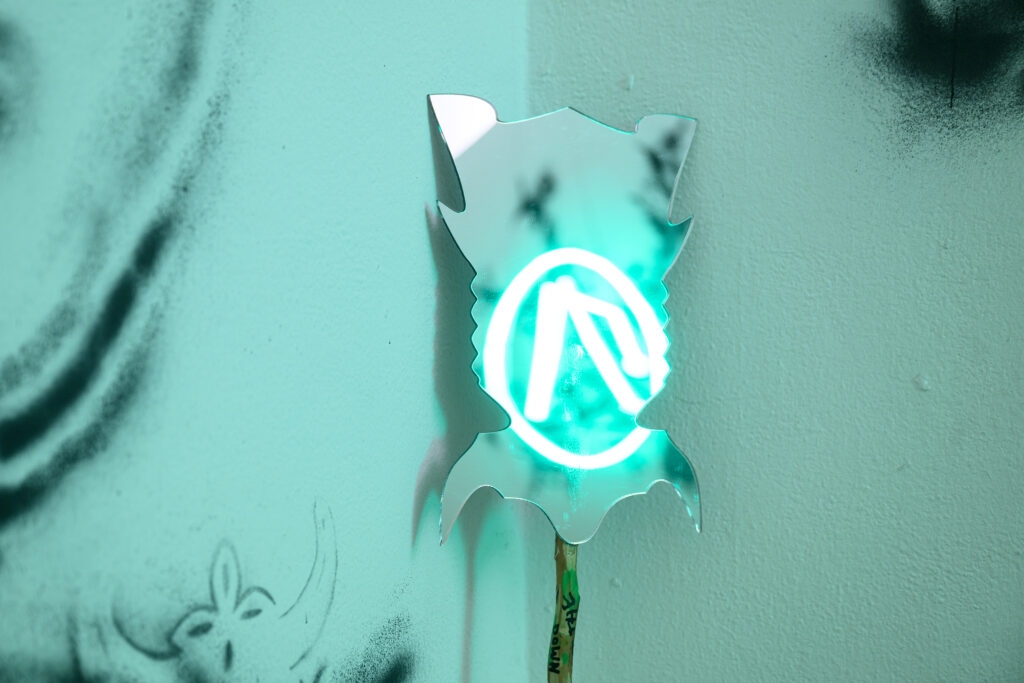
Despite the dark aesthetics of Hollow’s worlds, with which they seek to capture what today looks, sounds, and moves like, they represent exactly that. This goes all the way back to one of the influences behind the group’s immersive environments: queer spaces and clubs, where semi-secret underground cultures survive, however hostile the political climate might be. One of these clubs – Aura, a legendary place that existed in Tbilisi at the time of the civil wars of the 1990s and held parties, cross-dressing nights and avant-garde fashion shows while the rest of the city was chaotic and borderline unsafe – served as a direct point of reference for the group’s 2023 performance with the same title. The objects displayed in this exhibition come from the Aura performance, while The Compass, accessible by a QR code takes us behind the scenes of the immersive piece and tells how it was created.”
Curatorial text by Natálie Drtinová